Don't worry guys, I'm not gonna just post textbook reviews from now on.
It is the season of dissertation writing and I would like to share my love of this Epic Roman Poem with you.
When I first read this, I'm gonna admit, it took its time - but after around 2 or three reads, it's become easier and easier.
I first came across this book whilst looking for some good poetry to read a few years ago. I loved the sound of one long, brutal and terrifying poem of a guy trying to rebuild a state - whilst fighting a war and falling in love AND trying to prevent death. Oh yeah, he also does something else that is absolutely awesome - he travels to the underworld!
Characters:
So, as always - I would go with our protagonist Aeneas, but I have to say Dido is my favourite. She features in my dissertation and well, I loved reading and studying her character. She seems like a woman troubled with insane thoughts - ones expected in modern day psychodramas. It's poetically beautiful and she is so tragic that I almost cried. Poor Dido.
Themes:
My favourite theme throughout the entire poem was redemption. I loved the whole aspect of redeeming and how Aeneas configures himself to rebuild Rome. There's almost a hopeful light in that sense - since there's so much darkness and death surrounding him. It adds that glimmer of optimism that shines its way to the very end of the poem.
Storyline:
I gotta admit - a lot of stuff took place in that book. There was so much to take it, and yet all of it seemed to fit. Nothing really seemed out of place, everything was in order and there was a massive explosion of emotion now and again. If you ever read this book, (which I suggest you do), you'll find that Aeneas makes brutal and lengthy statements about emotion - and Dido makes this sorrowing monologue. There are intense descriptions of pathetic fallacy and metaphors for different ideologies surrounding the Ancient Roman world - Virgil seriously did well here.
Verdict:
I give this book 9.
100% for characters: Even though I though that Aeneas could be a bit whiny at times - I have to say, I loved Dido.
100% for themes: Redemption, retribution and lamentation were the best themes explored through language devices. I loved them!
100% for storyline: Ah, this has to be my favourite epic verse, the story is so interesting. There's so much in such a short space of time - you couldn't really imagine anyone dealing with that much heartbreak today and still being sane enough to recount it.
Tuesday, 6 September 2016
Monday, 5 September 2016
100: The Cambridge Companion to Medieval English Literature 1100-1500
The 100th post and I have something else up my sleeve...
Yes, I'm reviewing textbooks now.
I feel it necessary as I'm doing my dissertation to pick on some vital aspects of some crazy textbooks I've been reading and to share them with you in hopes that you too, may buy and idolise these textbooks for some time during the course of study.
Now, I'm using this one for my dissertation and after much plodding and twaddling - I've managed to make it to the end. Also, I'm sorry - but seeing as this is textbooks, there will be some technical language (I'll try to keep it at minimum) and spurting out random comments if I really hated the book ad nauseam.
I won't be reviewing textbooks like I review fiction - but instead I'll be including these three sections:
- most useful information to me
- most challenging section to read
- what could be improved or expanded?
So, here we go:
Most useful information:
Well, the most useful section of this textbook was on Medieval Romance. I feel that it was well explained with a very wide range of sources and gave information on everything from adapting stilnovoism to chansons de geste.
Most challenging section to read:
Oh God, the whole section on Chaucer. Everything about Chaucer is a challenging read to me. Chaucer's section was quite challenging to me - purely because what I remember of reading Chaucer was that it took me around 2 months to read The Canterbury Tales.
What could be improved or expanded?
I think that a section purely dedicated to mystery plays should be in there somewhere. Mystery plays only get a very small section in the book and well - it's a little underwhelming. I would think that because of the expansion of dramatics - mystery plays (and miracle plays) would require to be better focussed on. Maybe just a chapter dedicated to mystery plays should be in order.
Verdict:
I give this textbook 7/9
In terms of usefulness, it is quite useful.
But, in terms of covering mystery plays - maybe not so.
In terms of covering Chaucer though - it's heavy. Watch out.
Ref: Scanlon, L. (2009). The Cambridge Companion to Medieval English Literature from 1100-1500. UK: Cambridge University Press.
Yes, I'm reviewing textbooks now.
I feel it necessary as I'm doing my dissertation to pick on some vital aspects of some crazy textbooks I've been reading and to share them with you in hopes that you too, may buy and idolise these textbooks for some time during the course of study.
Now, I'm using this one for my dissertation and after much plodding and twaddling - I've managed to make it to the end. Also, I'm sorry - but seeing as this is textbooks, there will be some technical language (I'll try to keep it at minimum) and spurting out random comments if I really hated the book ad nauseam.
I won't be reviewing textbooks like I review fiction - but instead I'll be including these three sections:
- most useful information to me
- most challenging section to read
- what could be improved or expanded?
So, here we go:
Most useful information:
Well, the most useful section of this textbook was on Medieval Romance. I feel that it was well explained with a very wide range of sources and gave information on everything from adapting stilnovoism to chansons de geste.
Most challenging section to read:
Oh God, the whole section on Chaucer. Everything about Chaucer is a challenging read to me. Chaucer's section was quite challenging to me - purely because what I remember of reading Chaucer was that it took me around 2 months to read The Canterbury Tales.
What could be improved or expanded?
I think that a section purely dedicated to mystery plays should be in there somewhere. Mystery plays only get a very small section in the book and well - it's a little underwhelming. I would think that because of the expansion of dramatics - mystery plays (and miracle plays) would require to be better focussed on. Maybe just a chapter dedicated to mystery plays should be in order.
Verdict:
I give this textbook 7/9
In terms of usefulness, it is quite useful.
But, in terms of covering mystery plays - maybe not so.
In terms of covering Chaucer though - it's heavy. Watch out.
Ref: Scanlon, L. (2009). The Cambridge Companion to Medieval English Literature from 1100-1500. UK: Cambridge University Press.
Sunday, 4 September 2016
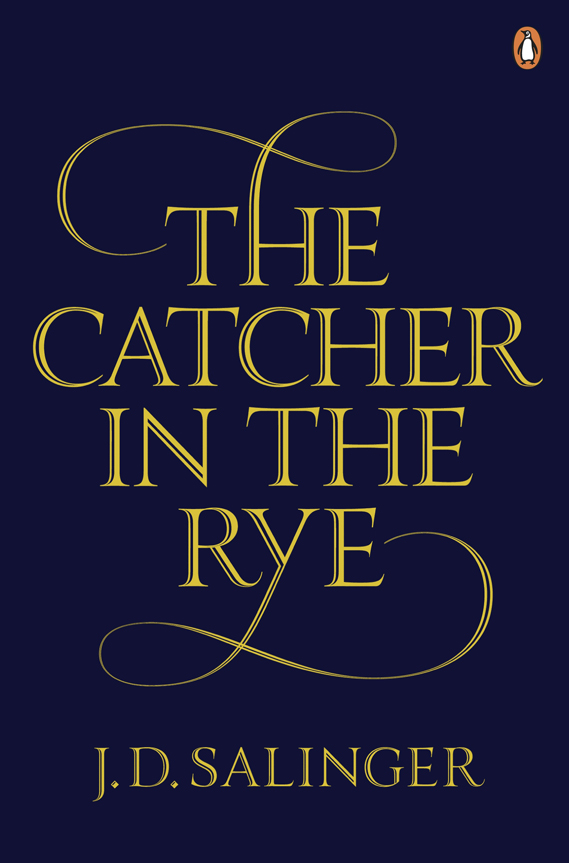
The Catcher in the Rye
I read this in my teens and even though I don't have very much to say about it, here is the main thing about this review. I want it to be positive - but when I read it in my teens I thought "hey! this is a great book!" I recently read it around some time last year for a second time and all I could think was "why the? Why did I think this was any good?"
Characters:
My favourite character (as is everyone's) was Holden. Holden is a troubled young man that basically embodies every teenager ever. He is socially awkward and speaks in weird slang that only became popular much later - and then went out of fashion again with the return of Standard English. I feel like Holden's character is on the whole, too easily relatable - there's no real character challenge there that makes you sympathise. It's all empathy and after a while, it gets boring and slightly monotonous. I did like the character - but not as much as I would've thought.
Themes:
My favourite theme was alienation. Now, Salinger did this theme extremely well (which is also probably why this book got a positive review out of me). Holden is constantly alienating people from him and there is a serious social awkwardness that I find Holden blows out of proportion - and this is almost always associated with teen angst. It's a brilliantly designed theme and I feel that there is a third dimension to this novel because of this theme.
Storyline:
Well, the storyline isn't much to look at. The entire book take place over the course of a year from when Holden gets booted from prestigious schools to when he ends up in a TB care home and looks back on his life whilst telling us this story. The entire story being a flashback, I found, was just a little predictable. But, saying that, this was probably because I read Less Than Zero and even though it is based on The Catcher in the Rye - I found Ellis's novel a lot more convincing.
Verdict:
I give this book 7/9
2/3 for characters: I was never a big fan of Holden - I thought sometimes he was just a bit of an ass. But mostly - he is the embodiment of teenage angst.
100% for themes: This was done at its best.
2/3 for storyline: Sometimes a bit monotonous and lengthy - I felt the storyline was slightly underwhelming.
Saturday, 3 September 2016
The Turn of the Screw
This, when I first read it back when I was 13 - was the ultimate 'nope' book. It scared the shit out of me. Movies don't frighten me, but tense books can leave me feeling utterly defeated. This book is one of the greatest horror prose pieces I've ever read. I would like to share with you exactly why...
Characters:
My favourite character was the unnamed narrator - he was listening to Douglas intently and it was just so tense. The atmosphere that James created around this character just became more and more intense with the fact that there is no name for our narrator either. The pressure just builds on this character - and therefore, it reflects straight back on to the reader. I loved it.
Themes:
My favourite theme - of course - was tension and suspense. Miles and Flora created this suspense excellently - with the ghost being possessive and controlling. It was a constant build of "what-if" and there is always a second, more gruesome answer to the argument that James only reveals piece by piece. It's a strange spellbinding prose piece that leaves you feeling controlled and enchanted.
Storyline:
I loved the possessive storyline. Possessive I mean that it was possessive in itself - there were moments of great possession in which the reader is enthralled. If you read it, you'll know what I mean by possession. There's a great deal of ghostly aura and enchantment in the storyline which makes it impossible to read it on a day-by-day basis. One sitting should do you good. Don't read before bed.
Verdict:
I give this book 9.
100% for characters: I loved every character in this book - seems like they were all in on the atmosphere. Even Miles.
100% for themes: I love suspense and mystery - Henry James just does it so well.
100% for storyline: There is a massive possession - possession and possession....So very possessive...
P.S - If you're looking to read The Turn of the Screw buy the edition that comes with The Aspern Papers - it's a comedy, it does you good after that possessive read.
Friday, 2 September 2016
The House of the Spirits
I'm tearing up because, well, it was just so emotional...
I can't even imagine - it is by far one of the greatest Latin American novels I've ever read.
If there's one book you read on this blog, make sure it's this one.
I cannot describe how much this book made me feel...
It's beautifully tragic - and completely heartbreaking. Yet, so perfectly complete and so satisfying to read.
Set in Latin America - this book spans 3 generations of a family. Starting with Esteban Trueba and his lover Rosa the Beautiful - Esteban seeks out Rosa's younger sister Clara, and marries her. They have a daughter named Blanca and two twin boys called Nicolas and Jaime. Blanca has a daughter named Alba.... and this lineage creates one of the greatest spiritual novels of all time (in my opinion anyway).
Characters:
My favourite character was Clara. Clara just seemed so completely aware of everything - down to when people were going to die. There was always a certainty about Clara that nobody ever listened to - and you can see it reflected in Blanca and Alba as well. It's a beautiful and compelling character personality that strikes you as being the "spirit" of the novel.
Themes:
My favourite theme is honour. Especially family honour in the midst of the civil war taking place. Alba is one who must decide between her family and the good of the country. Clara must decide between her family and her lover. Esteban must decide between his family and his reputation....And the list goes on. There is not one moment where everything is calm and serene. There is always a dramatic turn that left me feeling defeated and now - my heart still races at a mile a minute. It's absolutely brilliant.
Storyline:
The story begins with Rosa the Beautiful - the older sister to Clara and the lover of Esteban. Rosa dies suddenly and Esteban seeks Clara as his new lover. Clara and Esteban fall madly in love and helplessly tend to the child Blanca as their relationship splits apart. Clara retains her magical beauty and Esteban grows cold and distant from her - almost silently longing for her love again. Jaime and Nicolas are finally born and they grow up in the same environment but worlds apart - looking after their sister from their father. "The big house on the corner" turns into a dead zone and enthrals a mad spell cast on the entire family. For 90 years, this family endures strife and moments of complete desolation to the point of certain death. The shocks and dramatic turns left me with a feeling of incompletion and longing for more. I am definitely going to read this book again, but for now - I need time to recover.
Verdict:
I give this book 10/9
100% for characters: I loved Clara and Alba; I loved the twins and Blanca - I even loved Esteban at times - even though he was so very cruel at times.
100% for themes: I loved the theme of honour - there was just so much of it that it overwhelmed me with emotion by then - and it did make me cry. I know right, I cried.
4/3 for storyline: At the moment I began crying - I felt that the reason this book is called The House of the Spirits isn't because it has anything to do with ghosts - but it has more to do with the purely magically and enchanting nature of the novel and its characters. The characters themselves are spirits of the revolution - all spanning several different perspectives and teachings. It is a beautiful novel that I wish you will read.
End note:
Now, I know I don't normally put an end note on my blogs, but this one requires you to know how much I feel for this novel - as I type, my heart still bursts with emotion - I still wipe tears from my face, I still tap-dry my make-up. This book was able to evoke emotions in me that I didn't know I had.
You wake up at the end of the book.
It
So, this is an intense size of a book - also it is one of my favourite horror novels. Why? Well, this was the first horror novel I read that scared the hell out of me. I hate clowns.
I'm gonna try and keep this short - seeing as the name of this blog is "tiny reviews" and not "lengthy pieces of information that nobody's gonna read". I'm purely going to focus on the parts that I thought did well in the novel and exactly why you should read it.
You can already tell this is gonna be a positive review.
Characters:
My favourite character was "It" and this is because this morphing and strange creature did well at scaring the kids - but also did well on scaring the shit out of me. I seriously don't know how Stephen King does it - but whatever he does, it's very, very frightening.
Themes:
My favourite theme in the whole novel was the theme of fear and phobia. Not just the horror writing itself - but King wants to invite you to understand your own fear and phobias - that's until you read another Stephen King novel again and scare the daylights out of yourself.
Storyline:
I thoroughly enjoyed the storyline because of its sense to jigsaw everything together - as Stephen King does. It was full of unexpected turns and it was almost like you are working as you read because you have to piece things together throughout the book.
Verdict:
I give this book 9
100% for characters: Oh dear God why...
100% for themes: I challenge anyone to tell me who does fear and phobia better than Stephen King
100% for storyline: I enjoyed this part because it felt more like an investigation than a horror novel
Thursday, 1 September 2016
The Heart Goes Last
So I read my next Margaret Atwood novel. (This one is the last one I'm reading for now!) I didn't think this was as difficult to understand as the others - but didn't have the "social critique" storyline that the others had. Or maybe it did...
Characters:
My favourite character was Charmaine. She seemed quite human at times - but there was a deliberate disconnection from the reader to her. There was always a strange foreboding about Charmaine before she joined the company - and it lingered really well when she finally ended up there with her husband, Stan.
Themes:
You don't expect it to be a dark comedy - but since Atwood's name is on it - it is. Dark Comedy (I know is a genre), but in this case we're seeing it as a theme. There was a underlying wit that Atwood is so good at. A sort of laughing without an explicit joke. It's strange, but it's there - and whichever book you read by Atwood - from A Handmaid's Tale to Oryx and Crake - you will find it.
Storyline:
The storyline of this book contains a business that lets in Charmaine to work there and her husband, Stan. I felt like there was a seriousness about the storyline that was deliberately spoken down by the language used and this seemingly shaped the novel as a dark comedic reading.
Verdict:
I give this book 8/9
2/3 for characters: I liked Charmaine - but sometimes it can be tricky as I felt the reader was deliberately disconnected from her.
100% for themes: Dark Comedy is a strong suit of Atwood's
100% for storyline: I really enjoyed the story idea. It was a crude mixture between language and concept.
Subscribe to:
Posts (Atom)