Saturday, 6 August 2016

Zero K


After reading other Delillo novels such as: Falling Man, Cosmopolis White Noise and Underworld, I believed that Zero K would be the 'put aside' novel - as every author has one novel they didn't really put everything into and therefore it doesn't sound as good as the rest. I admit, Zero K started off a little slow - but when it picked up - it was probably the best Delillo novel I've ever read. 


Characters:

My favourite character was Ross Lockhart. This is because Jeffrey Lockhart (the narrator and his son) is constantly stuck between thinking his father is a heartless man and wanting to know his father to be a civil being with natural emotions - rather than the robot Jeffrey is finding him to be. After Artis is terminally ill, there seems to be a change in Ross' behaviour and emotions begin to surface. I think, by Jeffrey, my favourite line is when he claims that he's only just accepted Ross as his father and isn't yet ready to accept himself as Ross' son (he says this to his father). 

Themes:

I have always loved Delillo's take on abstract relations between human emotions and the scientific world. Delillo has this natural ability to link the advancement of science to human psychology - and this is done perfectly through the family relations in the novel and the connections to the surrounding, more scientific world. 

Storyline:

I admit again, at the beginning things were a little slow - but it picked up quickly and I've always loved Delillo's sense of shock. The novel is full of them - yet Delillo does it so well, it never becomes cliché. 

Verdict:

I give this book 9. 

100% for characters: I really did love the family relations, especially in a sci-fi novel. 

100% for themes: I just think what is real and what is perceived as real are interwoven so perfectly by Delillo that even the reader wants to know what the difference is and if there really is one. 

100% for storyline: Don Delillo's storyline's are always full of shocking and surprising twists regarding people - but in a world of science and business - Delillo truly pulls off the anti-cliché storylines absolutely perfectly. 

Friday, 5 August 2016

Carrion Comfort


With a cross between Sci-Fi and Horror, I found this story quite interesting - but the horror wasn't there for me. Then again, if you know me, you know that it takes a lot to scare me. Sometimes, the story got a bit lost with all the characters and changes in time - but the sustenance was the Sci-Fi genre - not the horror. If I was filing this on a bookshelf, I would feel it was Sci-Fi because of its extreme scientific assumptions and mutating creations - but Dan Simmons will need a lot more than this to scare me. 

Characters

My favourite character is Dr Laski because of his intellect and the very fact that he seems to be a holocaust survivor. The psychiatrist is probably the biggest brain in the novel, having the greatest insight into the Sci-Fi Chemical Therapy stuff that begins to get the ball rolling. Dr Laski also opens the book in the 40s - an era worth reading. 

Themes

The theme of Man vs Beast was probably the best one here. The book does lack in continuity, I found. It was a good read - but not to get too intensely into. Unfortunately, I like to get intense when I read and really understand everything. This book really didn't do that for me in terms of themes, 

Storyline

I really didn't like the time jumps, but I did enjoy the sense of foreboding in every single chapter. The themes weren't there for me and only the character of Dr Laski pulled it up - along with Melanie, Will and Nina. The storyline was a little lacklustre and I just expected a bigger catastrophe. 

Verdict

I give this book 6/9

100% for characters: Purely for Dr Laski. He was the best thing about the book. 

2/3 for themes: They were there, but not very prominent. 

1/3 for storyline: Other people may like it - but there wasn't enough horror for me. It was a little choppy for my taste. 

Thursday, 4 August 2016

Justine


In a story told by a woman named Therese; Justine is a frighteningly sadist novel with some really distressing scenes of rape and GBH. This is not for the light-hearted - and here's me thinking that because it was written in the late 1700s/early 1800s, it would be a "light read" and not as disturbing as A Clockwork Orange. I can now say that A Clockwork Orange didn't surprise me this much. This book made me feel physically sick. But, on the other hand, it is brilliantly written. 

Characters: 

My favourite character in this novel was Therese. She seems to be an understanding and loving character with her only intention being the rhetoric of the story - she seems both caring about the message and completely submissive towards the abusive encounters of the novel. 

Themes:

The best theme (but not my favourite) in this novel is abuse and misfortune. My favourite theme in this novel is probably guilt and redemption. These themes are best explored in the truly graphic scenes and their aftermath. I'm trying not to say too much - purely because I want to keep these reviews PG-13. 

Storyline:

The storyline - like Tess of the D'Urbervilles is just one depressing misfortune after another. Nothing is ever her fault - but it ends up being her fault anyway. I really enjoyed 120 Days of Sodom but this just takes the cake when it comes to being depressive, graphic and just plain disgusting. But, on the other hand, you hardly notice that you've been dragged backwards through Hell with this character - because it's ironically so poetically written that it kind of cushions the blow. Only a little. 

Verdict:

I give this book 7/9 

2/3 for characters: I just feel that the characters all suffer so much - there could've been ONE happy thing about it. But nope, nope and nope. No happiness for anyone. 

100% for themes: De Sade does this part the best - contrasting themes with the storyline and still managing to make everything piece together properly. Bravo. 

2/3 for storyline: It's the graphic scenes. They're so long. I could've done without some of the explanations of graphic rape. Nope. Nope. Nope. 

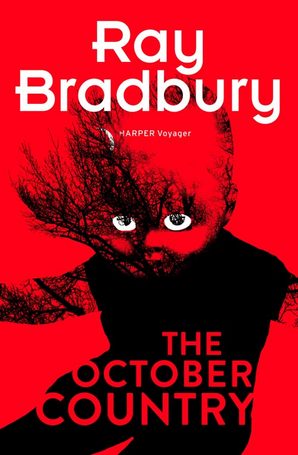
October Country


This series of short stories by Ray Bradbury concerns itself with the strange happenings around very "Halloween-esque" themes. I suggest you give it a read if you like Edgar Allan Poe and Henry James - because this is like a modern version of those. I will not be splitting this review up like I normally do - into characters, themes and storyline. But instead - I will be paying attention to stories I found to be concerning themselves with the strange and graphic the most and how they do so. 

1. The Dwarf

Now, this story is a seemingly disturbing autobiography of a dwarf who wants to make themselves seem taller. It has unusual rhetoric for the situation and the narrative is manipulated to make the situation seem more distressing than it actually is. Typical of Bradbury. 

2. The Watchful Poke Chip of H. Matisse

This avant-garde focal number has a poker chip made by Henri Matisse at the centre of a boring new trend that seems to fascinate all. I cannot say more since it is so short - sort of like Kafka's "The Dress". 

3. Jack in the Box

Actually disturbing. A mother raises her kid to become God. After telling him that his father was once God and he was killed by beasts. This story is unusual and I suggest that if you're not gonna read the entire book - please read this one. It is very strange. 

4. There was an old Woman

This story concerns itself with a woman trying to get her body back after Death stole it from her. If that does not sound strange then I don't know what does (Probably the previous story). 


Verdict:

I give this book 9

This is purely because of the language and structural contents of the book and how small things that are unusual can be made to seem particularly distressing for no reason whatsoever. Ray Bradbury has stirred my interest once again. His books "Fahrenheit 451" and "Something Wicked This Way Comes" makes him a master of distress - and that is what we should all discover one day. Everything is distressing and everything is uncomfortable. If you want to have nightmares about books - please feel free to read Bradbury. An excellent writer with such a precise talent - his books are amazingly written with only the best words chosen to fit every sentence he writes. 

Tuesday, 2 August 2016

The Island of Dr Moreau


This HG Wells horror is packed with strange metaphors for slavery and torture. I believe that this book has given me a greater insight into the strange AND in a plus, if you think you don't have time to read it - it's a very short book! I read it in a few hours and it was brilliant. Few hours well spent!

Characters:

I think my favourite character was either The Thing or Montgomery. This is purely because both of these characters change the most. The Thing progresses and then quickly regresses again - and Montgomery regresses and then rapidly progresses again. These are from Edward's considered states of what it is to be humane. I would say that The Thing has more humanity than Edward and Montgomery - and especially more than Dr Moreau. 

Themes:

I loved the theme of "who is the monster?" I could totally see a very Frankenstein-esque image coming out in how much Edward could relate to the "Beast People" - this was a true masterpiece of language. I particularly feel sorry for the "Beast People" - their circumstances are not their fault :(

Storyline:

Although the beginning was hard to get into as it began in media res - which I don't think I'll ever get used to. I loved the state of shock that seemed to resonate throughout the story - just as you think it's about to become mundane, there is another turn, another shock, another jump. 

Verdict:

I give this book 9

100% for characters: I really loved the contrasts between humanity and perceived humanity :)

100% for themes: With all the Frankenstein-esque themes - you can really see where Planet of the Apes conjured their "Beast Vs Human" Complex from. 

100% for storyline: Ignoring the part of in media res - I don't believe for a second that this was a challenging read - it was simply a shocking one. Given the fact that I'm not a HG Wells fan, I did really enjoy this one - making it my favourite HG Wells book to date :)

Restoration


This book I read a while back because of watching the film of it starring Robert Downey Jr. Well, I can clearly say that the book is so well written - I feel almost emotionally drained after reading it. Robert Merivel is a character of puzzling location and even more confusing occupation. The whole thing is written in 1st person from Merivel's POV and includes some startling events that make you really like Merivel after spending so long thinking he's a complete idiot.

Characters:

My favourite character is probably Katherine. I love Katherine because she seems so agreeable with everything - it is almost like nothing shocks her, but some things occasionally surprise her. She eventually has a child called Margaret and spends a lot of time sick and being cared for by Merivel. 

Themes:

My favourite theme in the book is selfishness and selflessness. It seems that Robert Merivel only learns what true selflessness is when he turns up at the Quaker estate and William Harvey buildings in which the Society of Friends nurse the plague sufferers either back to health, or help them on their way to the grave. Merivel here, falls in love with Katherine. 

Storyline:

The way in which Merivel moves location according to the evolution of his character is almost perfect. I won't say what happens by the end, but Merivel eventually puts others before himself and saves someone from the Great Fire of London. 

Verdict:

I give this book 8/9

100% for characters: I really liked Katherine, but I think Celia was a bit of a strange cookie. She didn't seem very developed - as Katherine was, but Celia got more time in the story. Both characters were very contrasted though - even though they were in similar situations regarding Merivel. 

100% for themes: The way in which Merivel grows selfless is also portrayed in the next novel Merivel: A Man of His Time, which I also loved. 

2/3 for storyline: Just wanted a better ending. That's all. 

Monday, 1 August 2016

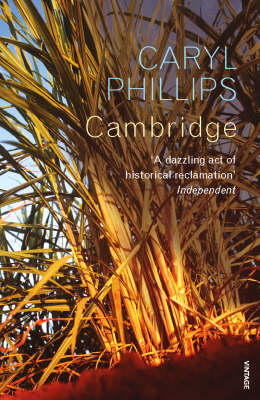
Cambridge


This book by Caryl Phillips is the third one I've read by him now - and seriously, they're really good. I loved this one because of its connections in sheer brutality. I loved the changing nature of the characters and the ending 

*SPOILER ALERT*

where he gets hanged - is absolutely brilliant.


Characters:

My favourite character is David - that is Cambridge when he is David. Going through the backstory of what happened to Mr Brown, David and his wife are in England and his wife dies in childbirth. David then becomes a three dimensional character who is sent of to Africa to preach the Gospels. He becomes a slave, lies in a hut and then murders Mr. Brown. A brilliant character with an intense and race-charged backstory - this man goes from being a hated criminal to a sympathised human like the events that take place in Truman Capote's In Cold Blood. 

Themes:

As it is with Caryl Phillips, the theme of race and historical conventions of race are always the most prominent. But here, I think the most important theme is humanisation and demonisation - where do we stop seeing someone else as human and is it really fair to take someone else's human rights away from them, no matter the circumstances? 

Storyline:

The interwoven storylines of Emily Cartwright and Cambridge are brilliant - the fact that David Henderson has a last name and then has it taken away from him, so he simply becomes "Cambridge" and then Emily Cartwright seems not to change at all until the end where her baby dies. Almost like an eye for an eye really. 

Verdict:

I give this book 8 out of 9. 

100% for characters: I think Cambridge was one of the best African characters I have ever encountered. 

100% for themes: The humanisation and demonisation of various characters by others really gives a lovely three dimensional perspective on to the characters' psychological states. A brilliantly produced theme. 

2/3 for storyline: Just because I wanted it to be longer. I didn't want it to end :)